The easiest way for your products to get discovered & specified by interior designers.
Trade-only marketplace for selected European furniture & lighting brands and verified interior design studios.
Why selling furniture to interior designers is broken
Between a designer discovering you to actually specifying your pieces on a project, too much still relies on memory.
Neither interior designers nor brands want to spend their time and resources on manual procurement processes; requesting and sending quotes via emails just for half of them to get buried, or discover hundreds of beautiful pieces at trade fairs just to not have the right information at hand when actively sourcing & specifying for a project.
Without a better system to organize, store and share the right information at the right time, all you can do is hope designers think of you when sourcing for their next project and that your quotes come in fast enough and don't get buried in their inboxes.
Procurist makes sure designers have instant access to all required information, whilst keeping product data and pricing protected from the outside.
How furniture brands reach interior designers on Procurist
trade exclusive.
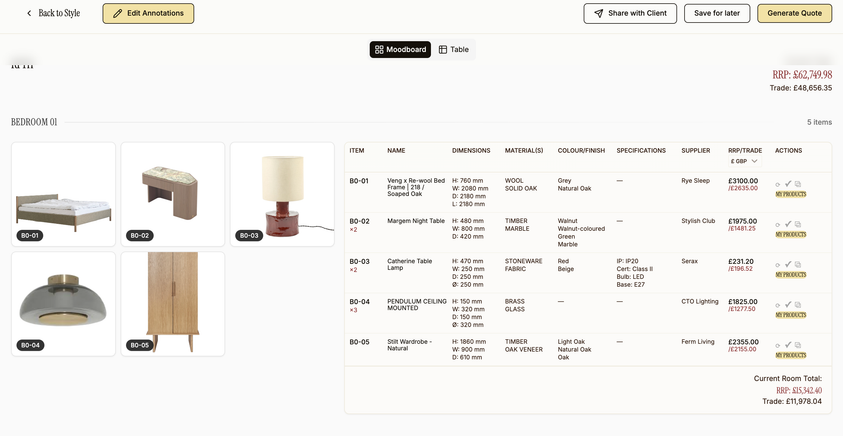
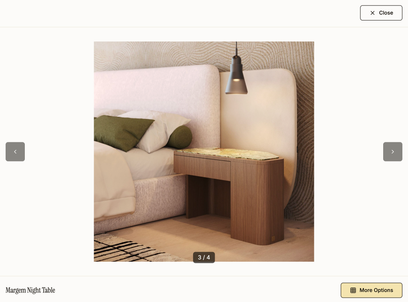
Our marketplace is integrated into a software for interior designers, allowing them to turn their floor plans, design drawings and briefs into FF&E schedules where they can add your products in a single click if they match the design intent and requirements.
This not only provides a seamless experience for designers but also ensures your products don't get lost between email threads and camera rolls.
Your product information is only accessible to authenticated interior designers actively using Procurist to source for their projects, and full product data (including trade pricing) is only shown in proposals where their project brief and budget matches.
How to sell furniture to interior designers through Procurist
How
Procurist
works for
you:
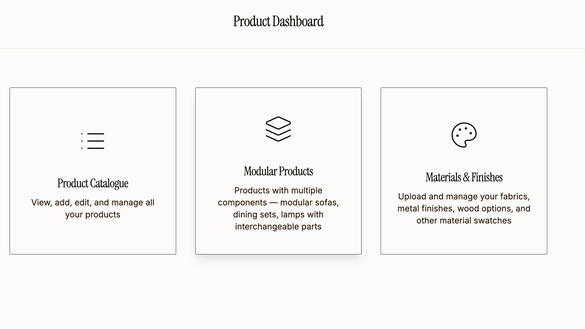
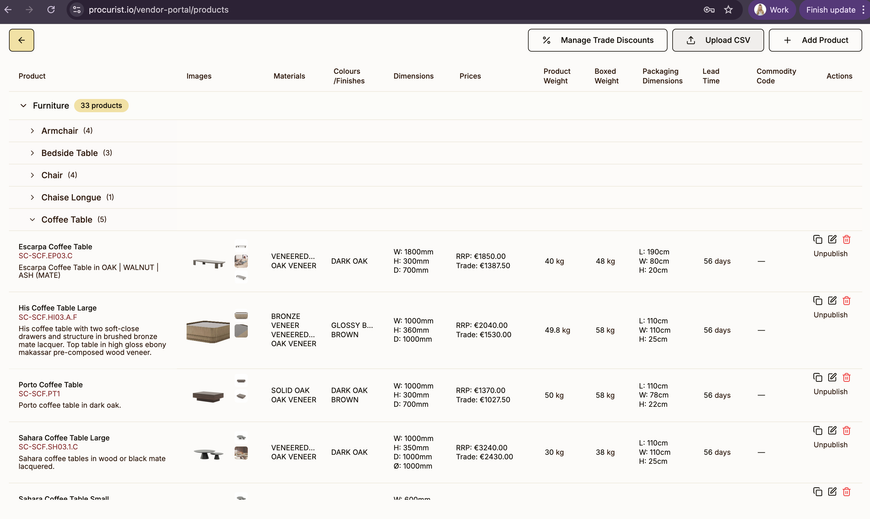
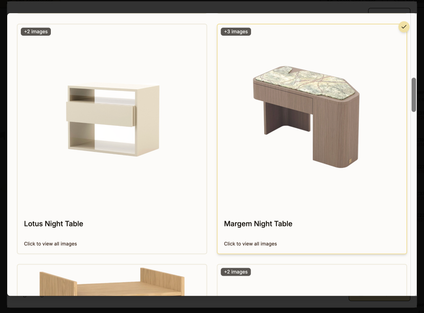
Upload your products to your catalogue and add customization options such as material catalogues, modular components & configurations once.
(you can update these any time).
Procurist matches your products to interior designers' projects and automatically proposes the best options and configurations in a single click.
When a designer on Procurist searches for products matching their project requirements, your catalogue is included in the results.
Your products integrate seamlessly into designers' workflow without any additional effort on your end, enabling them to easily add them to their FF&E schedules, client proposals and orders.
Procurist coordinates all orders, allowing designers to purchase from you through the platform.
You receive payments and order confirmations, alongside delivery addresses and we facilitate any required import documentation.

How do I sell furniture to interior designers through Procurist?
What are the catalogue requirements?
Joining is free for brands.
There are no ads on our platform and no way to sponsor or push your products other than by making beautiful pieces our designers love.
0
joining fee
fixed costs
Upload as many products and variations as you like for free.
you
control your pricing
You control your pricing by including RRP and Trade Price when uploading your products.
What does it cost to list my brand on Procurist?
Do I need to offer exclusivity to Procurist?
Curation & ethos
European craftsmanship,
designed & made in Europe.

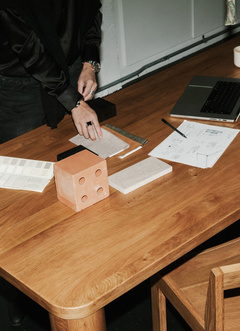

Procurist is creating a trusted industry platform for European brands and interior designers to work together.
All brands admitted to our platform are truly European; from Scandinavia to Portugal, established Italian brands to emerging French makers.
For us, who we admit is as important as who we don't admit, we frequently turn down ‘European’ brands who turned out to manufacture in East Asia.
Our curation is guided by our principle of supporting European brands who take pride in their craft and quality.
Beyond that, we don't curate based on style the way retail marketplaces do. Rather, we believe in providing the infrastructure for creativity and unique designs to flourish and allow our brands to publish all of their collection.
What kind of brands does Procurist accept?
How does Procurist decide which products designers see?
Ownership
Protect your brand.
Procurist provides the infrastructure for designers to discover and specify your products.
Beyond the required technical data, we are deliberately leaving enough open space for brands to choose how to present their pieces and share their stories with designers.
Your product information is never publicly accessible but only shown to verified and logged-in designers and architects actively sourcing for an eligible project.
Stay in control over your pricing.
You set both your trade price and RRP when you upload your products.
Trade pricing is only shown to pre-qualified designers actively sourcing for projects where your products match the brief and budget.
Your prices are never visible publicly or to non-trade buyers.
Who can see my products and pricing?
Do I control my trade pricing on Procurist?
How are designers on Procurist verified?
Procurist keeps your brand top of mind when it matters –
ensuring your products make it onto the FF&E schedules of the designers who already love them,
and proposed to designers actively sourcing what you’re making.
How to join Procurist
To have your products specified and procured by our growing community of interior designers:
- Apply to join below.
- Get an invite sent to you via email and set up your account within 24h.
- Complete your account details and accept the terms and privacy policy.
- Start uploading your catalogues.
Once you've completed the first part of your profile, we are happy to schedule an onboarding to walk you through and help with uploading your catalogues and completing your profile.
Apply to List Your Brand