Get Your Furniture & Lighting Specified by Interior Designers
Procurist connects your catalogue directly into designers' FF&E workflows, automating specs, quotes, and orders, without you spending on ads.
A trade marketplace built by an interior designer. For the brands designers actually want to work with.
Why selling furniture to interior designers is broken
You make exceptional furniture. The hard part is getting it in front of the right people at the right time.
Why strong products still don't convert into sales.
Brands lose sales not because designers don't like their products, but because procurement is slow, fragmented, and happens under extreme time pressure.
- 76%
of B2B buyers choose the vendor that responds first with a clear quote, even if they are not the cheapest. Slow response times directly lose deals.
- 20–30%
of sales team time is spent on repetitive administrative work such as preparing quotes, checking product data, and answering specification questions.
- 5%
of total annual revenue is lost by B2B manufacturers due to manual sales and quoting processes.
- 12–18%
of qualified leads from interior design fairs convert, largely due to poor follow-up, timing mismatches, and lost visibility after discovery.
- 10–12
is the number of suppliers most interior designers use on repeat across projects, despite discovering dozens of new brands they would otherwise like to specify.
You already know the arithmetic. You spend on Instagram, on Pinterest, on Google Ads, on a stand at Salone or Decorex, and the vast majority of that spend reaches consumers who will never buy at trade prices, architects who are not purchasing furniture, and other brands who are browsing the same feed you are. The people who actually specify and procure furniture and lighting for real projects, interior designers working on residential and hospitality schemes with real budgets and real timelines, are almost impossible to reach through these channels at the moment they are making decisions.
Social media is the most visible version of this problem. You post beautiful product photography, you invest in styling and content, and you get engagement from other brands, from consumers, from accounts that will never generate a trade enquiry. Meanwhile, the designer working on a £200k residential project three miles from your studio has never heard of you, not because your product is wrong for her project but because nothing in her current workflow surfaces your brand at the point when she is building her FF&E schedule and selecting products.
That timing problem is the one that costs you the most. Designers make specification decisions during a narrow window, when they are actively building their schedules and matching products to project requirements. You have no visibility into when that window opens. By the time a designer reaches out to you, they have often already decided and are confirming availability, or they have already specified a competitor because that competitor happened to be easier to find at the right moment.
And when a designer does find you, the process that follows is rarely efficient. Trade account applications, emailing price lists as PDFs, answering specification questions over email, generating quotes manually, chasing confirmations. Your team spends hours on admin per enquiry, and a meaningful percentage of those enquiries never convert because the process is too slow or the designer moved on to a brand that responded faster.
Trade shows compound this. You invest thousands in a stand, you meet designers for three days, you collect business cards, and then you hope those contacts convert months later with no persistent mechanism to stay in front of them. There is no ongoing trade channel. There is a three-day event and then silence until the next one.
The fundamental problem is not that your products are hard to sell. It is that the infrastructure for selling furniture and lighting to interior designers barely exists. What passes for a trade channel today is a collection of disconnected, expensive, low-intent touchpoints that consume your budget and your team's time without reliably connecting you to designers who are ready to specify.
The problem isn't demand. It's timing, speed, and access to the right information.
That's why we created Procurist.
Procurist was built to fix the moment where most supplier sales are lost.
We ensure your products surface when they actually match a live design brief, technical requirements, budget, and timeline, so they are included in the proposals designers send to clients — not forgotten after discovery.

Procurist was built to fix the moment where most supplier sales are lost.
We ensure your products surface when they actually match a live design brief, technical requirements, budget, and timeline, so they are included in the proposals designers send to clients — not forgotten after discovery.
Your catalogue, inside the tool designers use to build every FF&E schedule.
Procurist is a procurement platform where interior designers build their FF&E schedules, source products, generate quotes, and manage orders. When a designer searches for a dining table in solid walnut under £5,000 with a six-week lead time, your products appear alongside your specifications, your trade pricing, and your lead times, because the designer is searching inside the tool they already use to run their projects.
This is not browse-intent. This is specification-intent. The designer is not scrolling for inspiration. They are building a schedule for a live project with a confirmed budget, and they need a product that matches specific requirements. If your product matches, it gets specified. If it gets specified, it moves into the quoting and ordering workflow automatically.
What brands on Procurist can expect.
Procurist is building the trade channel that should have existed years ago: a persistent, specification-driven connection between European furniture and lighting brands and the interior designers who buy their products.
Discovery at decision time, not during a scroll.
Designers find your products while they are actively building FF&E schedules, searching by product type, style, dimensions, material, budget, and geography. Your catalogue surfaces when a designer needs exactly what you make, not when they happen to be browsing Instagram between meetings. This is the difference between specification-intent and browse-intent, and it is the difference between a trade lead and a vanity metric.
Specification-driven leads, not cold enquiries.
When a designer contacts you through Procurist, they have already reviewed your specifications, your pricing, and your lead times. They are not asking for a brochure. They are ready to confirm an order or finalise a selection.
Automation replaces the admin that drains your team.
When a designer specifies your product on Procurist, the data flows automatically. Your specifications, your trade pricing, your images, your lead times are already in the system. No manual quoting. No emailing PDFs. No chasing spec details back and forth. The designer sees everything they need to specify and order, and your team does not spend three hours generating a quote that may or may not convert.
Reduced admin per trade enquiry.
Manual quoting, emailing price lists, answering repetitive specification questions: Procurist automates the data exchange that currently consumes hours of your team’s time per enquiry. Your team focuses on production and relationships, not on formatting PDFs.
Persistent presence in the designer’s daily workflow.
Trade shows give you three days of visibility. Social media gives you a fraction of a second in a feed. Procurist gives you persistent, ongoing presence inside the tool designers use every day to build schedules and source products. You do not need to hope a designer remembers you from a trade show six months ago. You are present in their workflow the next time they search for a product in your category.
A persistent trade channel, not a one-off event.
Unlike a trade show that gives you three days of visibility per year, Procurist keeps your catalogue in front of designers every day they open the platform to work on a project. The next time a designer needs a product in your category, you are there.
Direct access to active designers.
Your catalogue is visible to verified interior designers actively working on residential and hospitality projects across the UK and Europe. These are not passive browsers. They are professionals building FF&E schedules with budgets attached.
No ad spend required.
Designers come to Procurist to build schedules and source products for their projects. Your catalogue is there when they search. This is organic, intent-driven discovery built into a procurement workflow, not paid impressions competing with consumer content. You are not paying for visibility. You are paying to be part of the infrastructure designers use to do their jobs.
How to sell furniture to interior designers through Procurist
From catalogue to specification in four steps.
Upload your catalogue and set trade pricing.
Provide your product data, specifications, images, and trade pricing. Procurist structures everything so designers can find, compare, and specify your products without requesting additional information by email.
Designers find your products during schedule creation.
When a designer on Procurist searches for products matching their project requirements, your catalogue is included in the results. Products are matched based on specifications, style, budget, and geography, not based on advertising spend or paid placement.
Specification and quoting happen automatically.
When a designer specifies your product, it enters their FF&E schedule with full data already populated. Quotes generate automatically from your trade pricing. No manual quoting process. No back-and-forth emails.
Orders flow through the platform.
Confirmed orders come through Procurist with all specifications, quantities, and delivery requirements clearly documented. Your team receives a structured order, not a chain of emails with attachments missing half the details.
Upload
Connect your catalogue.
Upload your product specifications and images once. Procurist turns this into structured data to match and propose your products to interior designers actively looking for what you offer.
Procurist automatically adds your products to live design projects, client proposals, and product schedules when they match the brief, budget, and technical requirements.
Stay top of mind without chasing leads. Designers no longer have to remember you weeks later — your products resurface at the exact moment they are specifying.
Be discovered by new designers beyond your existing network. Procurist removes procurement friction, making it viable to buy even a single item from a new supplier.
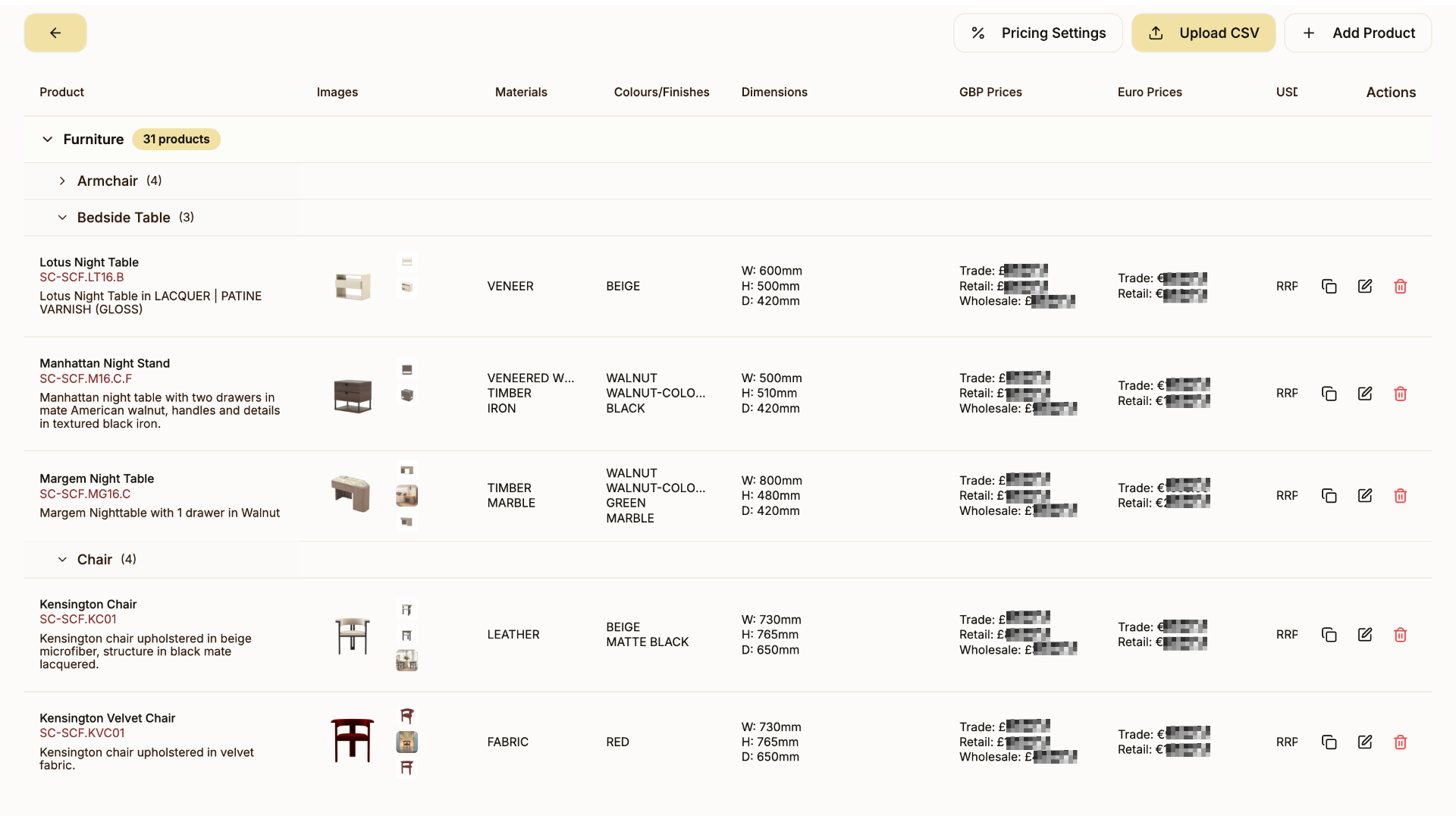
Automated Specification
Procurist runs specification and quoting for you.
Specification questions are handled in one place. Designers get the exact technical details they need without endless back-and-forth.
Quoting becomes structured, fast, and consistent. Procurist gathers the right inputs upfront so your team isn't rewriting the same quotes repeatedly.
Fewer dead-end enquiries. You spend time on projects that are actually moving forward — not speculative requests with missing info.
Your products stay "ready to specify." Accurate specs, images, lead times, and pricing rules are always available when decisions are being made.
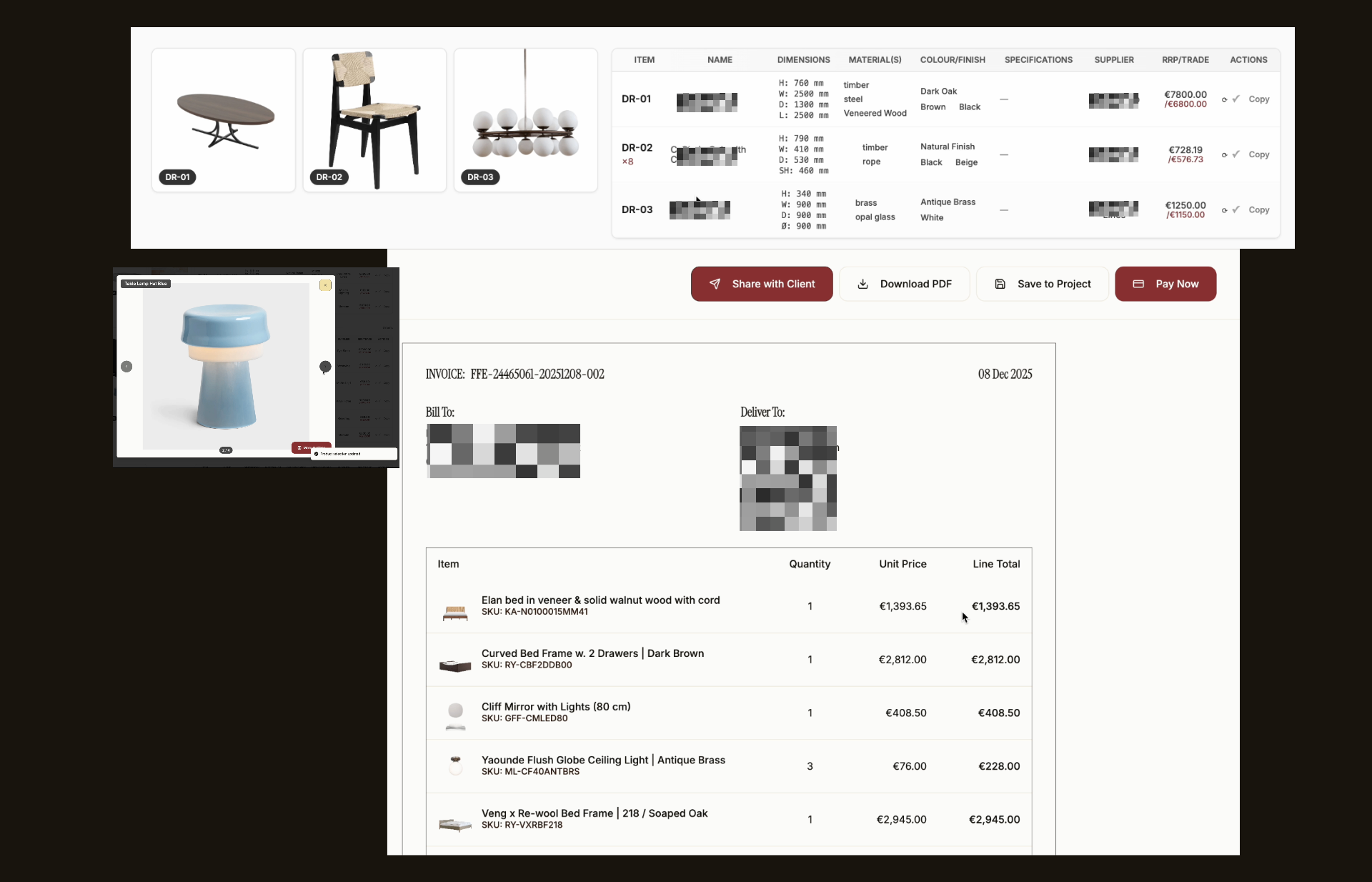
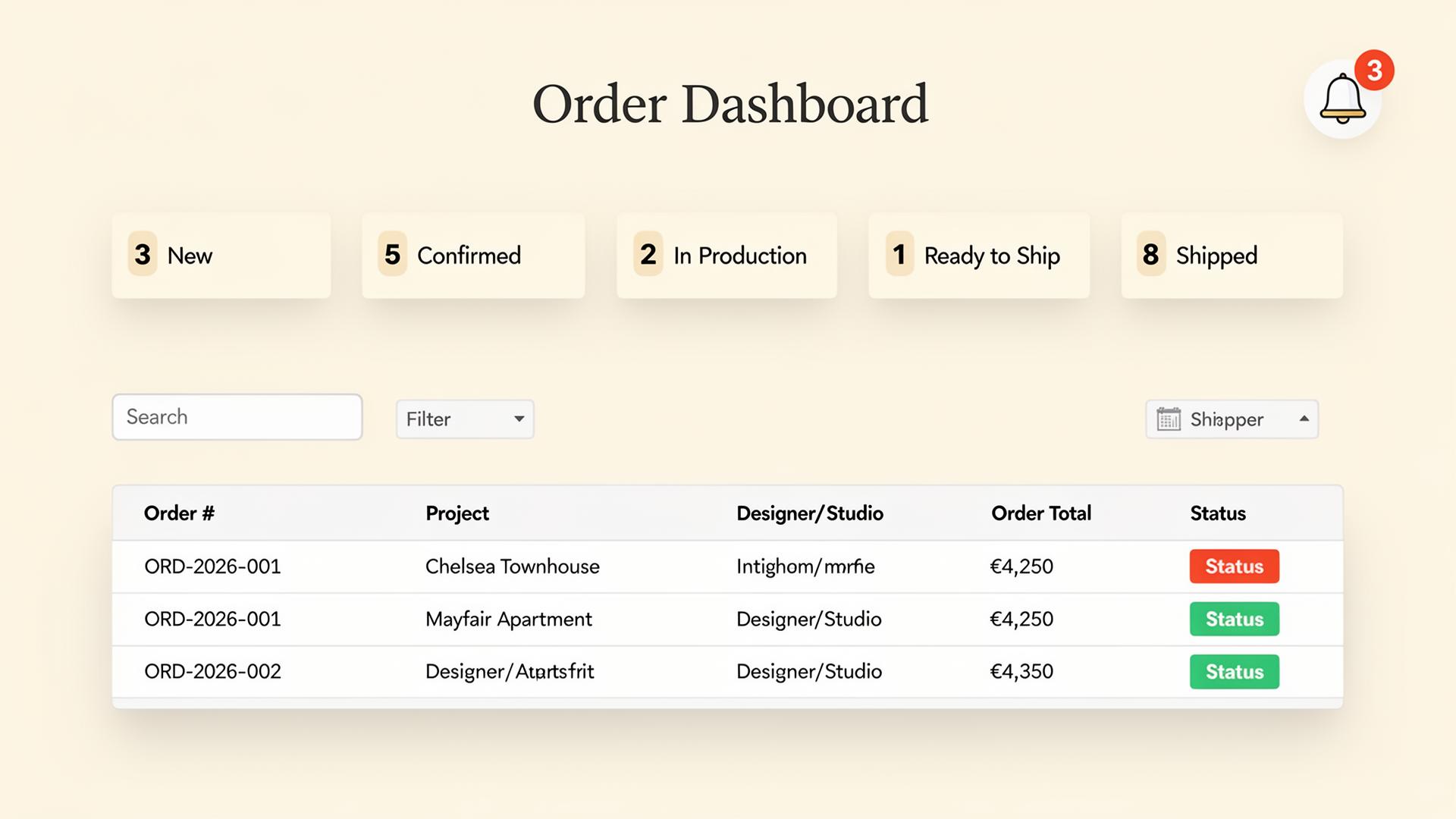
Order Fulfillment
Orders, payments, logistics, and imports — handled.
We notify you when an order is placed. Orders come with full context — project, quantities, finishes, delivery details, and timeline.
Payments are collected and confirmed. Procurist handles payment collection so you can proceed with confidence.
Logistics and import documentation are managed end-to-end. Shipping coordination, paperwork, and updates stay organised in one workflow.
All you have to do is keep creating outstanding products. Procurist handles the operational friction from specification to delivery.

Joining is free for brands.
There are no ads on our platform and no way to sponsor or push your products other than by making beautiful pieces our designers love.
0
joining fee
fixed costs
Upload as many products and variations as you like for free.
you
control your pricing
You control your pricing by including RRP and Trade Price when uploading your products.
A trade channel for professional buyers.
Not a consumer marketplace.
This distinction matters, and if you are a brand that has spent years building a reputation for quality and craftsmanship, it matters enormously.
Procurist is not a consumer marketplace. It is not a platform where retail buyers browse for discounts. It is not a directory where brands pay for placement and hope someone clicks.
Every designer on Procurist is verified as a working interior design professional. They access your full catalogue at your trade pricing, which you control. Your brand is presented with your imagery, your specifications, your positioning. Nothing is commoditised. Nothing is discounted for consumers.
This is B2B trade infrastructure, purpose-built for the relationship between furniture and lighting brands and the interior designers who specify their products. Your pricing stays controlled, your brand positioning stays intact, and the buyers on the other side of the platform are professionals with live projects and confirmed budgets.
Procurist does not accept advertising. Products are not promoted based on how much a brand pays. Products surface based on how well they match a designer's project requirements. Your catalogue competes on quality, specification, and relevance, not on marketing budget.
There is also no restriction on style. Procurist curates based on quality and manufacturing standards, not aesthetic preference. Whether you produce minimalist Scandinavian lighting or ornate Italian furniture, the platform supports your products reaching the designers whose projects call for exactly that.
| Trade shows | Archiproducts / 1stDibs | Procurist | |
|---|---|---|---|
| Buyer type | Mixed (trade + consumer) | Mixed (trade + consumer) | Verified designers only |
| Discovery timing | 3 days per year | Browse-intent | Specification-intent |
| Procurement workflow | None | None | Full: spec, quote, order |
| Quoting | Manual (email/PDF) | Manual (email/PDF) | Automated from trade pricing |
| Visibility based on | Stand location + budget | Advertising spend | Project relevance |
| Pricing control | Full | Varies | Full (trade pricing you set) |
Buyer type
Trade shows
Mixed (trade + consumer)
Archiproducts / 1stDibs
Mixed (trade + consumer)
Procurist
Verified designers only
Discovery timing
Trade shows
3 days per year
Archiproducts / 1stDibs
Browse-intent
Procurist
Specification-intent
Procurement workflow
Trade shows
None
Archiproducts / 1stDibs
None
Procurist
Full: spec, quote, order
Quoting
Trade shows
Manual (email/PDF)
Archiproducts / 1stDibs
Manual (email/PDF)
Procurist
Automated from trade pricing
Visibility based on
Trade shows
Stand location + budget
Archiproducts / 1stDibs
Advertising spend
Procurist
Project relevance
Pricing control
Trade shows
Full
Archiproducts / 1stDibs
Varies
Procurist
Full (trade pricing you set)
European Craftsmanship. Without the Compromises.
Procurist exists to make Made in Europe the better business decision, not a trade-off.
We curate a network of manufacturers across Europe and ensure their products are specified based on quality, lead times, and project fit — not advertising spend or noise.
Our role is to reduce friction, protect pricing, and ensure the best products are chosen when it matters.




Questions brands ask before joining.
Why is it so hard to sell furniture to interior designers?
How do furniture brands get discovered by interior designers?
Can this replace trade shows for reaching interior designers?
What is the best alternative to trade shows for reaching interior designers?
How can I stay top of mind with interior designers without a sales team?
How do I generate trade leads as a furniture or lighting brand?
Is Procurist a consumer marketplace?
How is this different from listing on a platform like Archiproducts or 1stDibs?
Get your catalogue in front of designers who are ready to specify.
Interior designers on Procurist are building FF&E schedules for live projects right now, searching for products by category, style, budget, and lead time. If your furniture or lighting should be part of those projects, it should be on Procurist.
Upload your catalogue. Set your trade pricing. Let designers find you at the moment they are making specification decisions.
Apply to List Your BrandLast updated: October 2026